One advertisement: Tommy Hilfiger

Before the online age reaching the mass audience was much more intriguing and exciting. You could get the most driving feedback from newspapers and magazines or TV and radio, but if you had a good product and good idea for the ad, you could reach out with the help of outdoor advertising. One of my favourites in outdoor advertising history is Tommy Hilfiger.

In 1985 Tommy Hilfiger was nobody on the global level. But the advertising art director George Lois decided to introduce the talented fashion designer with a really courageous outdoor campaign.
Set to straight away.

The billboard was huge and in the heart of Manhattan. Usually, when your name is written down in three-metres-high letters over New York’s Times Square you should be a star already. However, with Hilfiger it was the other way round. Hilfiger was almost nobody, but his name was side by side with the world famous names and brands!

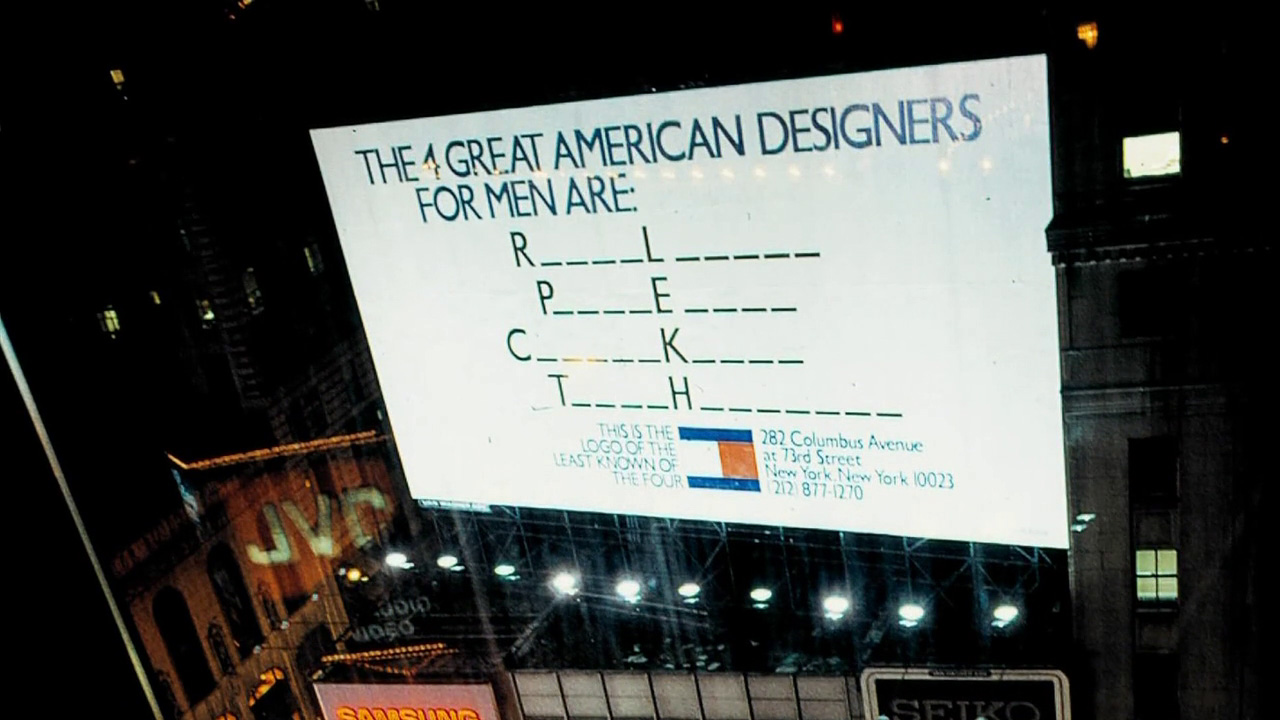
So, back in 1986, the arrival of Hilfiger’s fashion brand was introduced by a huge billboard in Times Square and comparing the unknown Hilfiger with the American greatest fashion designers (and also household names).

Hilfiger_NYTimes
Billboard of Tommy Hilfiger in New York Times Square. Picture: New York Times

The debut campaign for his label read:

The 4 great American designers for men are:
R _ _ _ _ L _ _ _ _ _
P _ _ _ _ E _ _ _ _
C _ _ _ _ _ K _ _ _ _
T _ _ _ _ H _ _ _ _ _ _ _

At the bottom of the poster there was also the address to Hilfiger’s shop.
New York and the rest of the Americans understood immediately that the first three names are Ralph Lauren, Perry Ellis and Calvin Klein. The last name, competely unknown, was comparing himself to all the famous designers! The ad was outrageous and this kind of arrogance (or confidence?) was never seen before.

“In most households, the first three names (Ralph Lauren, Perry Ellis and Calvin Klein) are household words. Get ready for another. His name (hint) is Tommy. The second name is not so easy. But in a few short months everybody in America will know there’s a new look in town and a new name at the top. Tommy’s clothes are easy-going without being too casual, classic without being predictable. He calls them classics with a twist. The other three designers call them competition,“ read the campaign.


Hilfiger_Art_of_ideas

Unfortunately I could not be there myself, but suddenly the whole city was talking about the campaign and Tommy Hilfiger became an overnight sensation.
Hilfiger has said that if he hadn’t done this kind of campaign, he would probably be poor today.

Basically this campaign made Hilfiger think about his reputation more than ever because his career was on the line. And this campaign made him work harder than ever to justify the hopes.

Hilfiger has commented: „I rolled up my sleeves and worked harder than I ever thought I’d work. I knew there would be only one way to prove the naysayers wrong, and that would be to come out with amazing clothes, so I literally rolled up my sleeves and worked like an animal making sure that every button, every zipper, every button hole, every color, every fit, every fabric was to perfection.”


Video: Tommy Hilfiger ja George Lois. Video: MktgStudyGuide

The ad was and is nice and ambitious.
First. To include the names of your competitors is a brave step. Hilfiger considered the other three names competitors, but these three most likely not at all. It would be the same as someone would say that there is Agatha Christie and there is Arthur Conan Doyle and now he or she is the thirs one. As good as Christie and Conan Doyle but nobody knows about them yet.

Second. To not include regular people or super models or prdocuts in the fashion campaign was even a bolder step. Initially Hilfiger wanted to use models wearing his clothes, but the creative team banned the idea.

Third. The ad had also playfulness. The game of hangman is really simple and everyone wants to give a try. Even if you do not care about fashion at all, you want to take a guess and try to find out the answer. Understandable for all generations.

Fourth. Do you advertise on a small scale everywhere or strategically in one (and the most important) place? Hilfiger chose the second option. And for the United States there was no better place for billboards than Times Square. Maybe today this approach might not be so special at all, but we all know that posters, billboards and outdoor media will always stay with us.

And just to add some other ideas: also the logo of Tommy Hilfiger is a success. Timeless, American, minimalist.
The campaign always focused on the logo of Tommy Hilfiger, that use the same colours as the American flag – red, white and blue. And the letter H, which is the “H” for “Hilfiger”.

Together with the remarkable support of global consumer recognition, Tommy Hilfiger has been building an extensive distribution network in over 115 countries and more than 1,600 retail stores all over the world. Tommy’s web page says that global retail sales of the Tommy Hilfiger brand were US $6.5 billion in 2015.

Idea of the Day: when nobody knows about you, position yourself on the same level as your competitors.


Additional information:
Tommy Hilfiger home page

Another Mag – The Visual Language of Tommy Hilfiger

tommy-hilfiger-logo
Tommy Hilfigeri logo. Pilt: famouslogos.net

Kuidas Tommy Hilfigeri bränd suureks sai?

Enne online-ajastut käis massidesse jõudmine hoopis põnevamalt. Kõige võimsama tagasiside võis saada ajakirjadest ja ajalehtedest või televisioonist ja raadiost, kuid hea reklaamiidee ja toote korral võis inimeste teadvusesse jõuda ka näiteks andeka tänavareklaami abil. Ja minu üheks isiklikuks lemmikuks on selles osas Tommy Hilfiger.

Aastal 1985 ei olnud Tommy Hilfiger veel mitte keegi. Reklaamimees George Lois aga otsustas tutvustada andekat moedisainerit eriti julge reklaamiga. Mõeldud, tehtud. Reklaam tuli suur ja otse New York Times Square’il.
Tavaliselt uhkustatakse Times Square’il siis, kui juba ollakse tõeline staar. Kui sinu nimi on loetav maailma ühel kuulsaimal väljakul, siis järelikult peaksid olema juba tõeline tegija. Aga Tommy Hilfiger keeras selle kontseptsiooni pea peale.

Seega, aastal 1986 saabus Hilfigeri bränd areenile suure reklaamtahvlina Manhattani südames, pannes teda ühte ritta tolle aja kolme suurima moeikooniga.

Hilfiger_NYTimes
Hilfigeri reklaam New Yorgis. Times Squre. Pilt: New York Times

Tahvlil jooksis seega järgmine tekst:

Ameerika neli suurt disainerit on:
R _ _ _ _ L _ _ _ _ _
P _ _ _ _ E _ _ _ _
C _ _ _ _ _ K _ _ _ _
T _ _ _ _ H _ _ _ _ _ _ _

Ja reklaami alumises osas poe aadress.
New York ja kogu muu Ameerika said aru, et esimesed kolm on Ralph Lauren, Perry Ellis ja Calvin Klein. Viimane nimi, ise täiesti tundmatu, tituleerib ennast juba Ameerika suurimate sekka – sellist ülbust ei olnud varem kohatud.

Ajakirjades oli samasuguse ülespoomismängu juures veel selline tekst:
“Enamikes peredes ja majapidamistes on kolm esimest nime tuntud nimed. Pange aga end valmis, et lisada sinna veel üks nimi. Vihjeks, et tema eesnimi on Tommy. Perekonnanimi ei ole aga nii lihtne. Mõne kuu pärast teavad Ameerikas aga kõik, et linna peal on uus mood ja esile on kerkinud uus nimi. Tommy riided on mõnusad ja lihtsad, kuid mitte liialt igapäevased (ingl. k. casual); klassikalised, kuid mitte liialt etteaimatavad. Ta ise nimetab oma stiili konksuga klassikaks, ülejäänud kolm disainerit aga konkurendiks.”

Hilfiger_Art_of_ideas


Kahjuks ei olnud ise juures, aga praktiliselt olevat kogu linnas liikunud jutt uuest tegijast kulutulena.
Hilfiger ise on maininud, et kui ta poleks tollal reklaamitegijaid kuulanud, oleks ta endiselt vaene.
Ja otseloomulikult sundis see reklaam teda töötama ja pingutama, et ennast kolme tipptegija kõrval õigustada. Hiilfiger kommenteeris asja nii: “Ma keerasin oma varrukad üles ning pingutasin rohkem kui ma eales seda olin teinud. Pidin tõestama kõigile kahtlejatele, et nad eksivad. Ja selleks oli vaja välja tulla hämmastavalt heade riietega. Ma sõna otseses mõttes keerasin varrukad üles ja töötasin nagu loom, veendudes, et iga nööp, iga lukk, iga nööpauk, iga värv, iga suurus ja iga kangas oleks täiuslikud.”


Video: Tommy Hilfiger ja George Lois. Video: MktgStudyGuide

Reklaam on andekas ja ambitsioonikas.

Esiteks. Kampaaniasse läksid sisse konkurentide nimed. Hilfiger pidas neid konkurentideks, aga nood Hilfigerit kindlasti mitte. Umbes sama, nagu keegi ütleks, et on olemas Agatha Christie ja Arthur Conan Doyle ja et tema nüüd on see kolmas ja sama hea, aga kellest keegi veel midagi ei tea.

Teiseks. Moemaailma kohta väga julge samm reklaamida ennast nii, et ei ole näha ei tooteid ennast ega ka modelle. Hilfiger ise vist ikkagi soovis alguses reklaamida oma kaubamärki klassikaliselt koos modellide ja toodetega, kuid see oli reklaamitegijate poolt ära keelatud.

Kolmandaks. Reklaamis on ka mängulisust. Neli nime ning vana hea ülespoomine, kus on antud ette mõned tähed ning tuleb ära arvata ülejäänud tähed. Isegi, kui mood ei huvita, siis vähemalt tekib hasart, et nimesid ära arvata. Arusaadav lastele ning nostalgiahõnguline vanemale põlvkonnale.

Neljandaks. Kas reklaamida väikeselt kõikjal või suurelt ühes strateegiliselt tähtsas kohas? Hilfigeri peast käis samuti see küsimus läbi ning otsus oli valida teine variant. Ameerikas ei olnud sellel ajal reklaamtahvlitele paremat kohta kui Times Square. Tänapäeval ei ole see võib-olla midagi nii erilist kui tollal, kuid plakatid, postrid ning ja muu välireklaam jääb alati alles.

Kui reklaamist endast välja minna, siis tuleb öelda, et ka logo on Hilfigeril hästi õnnestunud – ajatu, ameerikalik, minimalistlik. Reklaamikampaania keskmes oligi Hilfigeri logo, mis kasutab Ameerika lipuvärvides olevat sinist, punast ja valget ning suurt H-tähte – H nagu Hilfiger.

Tänaseks on Tommy Hilfiger esindatud enam kui 115 riigis ja tal on enam kui 1600 poodi üle maailma. 2015. aastal oli Hilfigeri kaupade jaemüük 6,5 miljardit dollarit.

Idee kunst:
Kui sinust keegi midagi ei tea, siis pane ennast tippudega samale tasemele.

Lisalugemist:
Tommy Hilfigeri kodulehekülg

Another Mag – The Visual Language of Tommy Hilfiger
tommy-hilfiger-logo
Tommy Hilfigeri logo. Pilt: famouslogos.net

Nice to meet you, Mister W

A bulk movement of air on the surface of the Earth aka the wind is trying to find its place in society. He wanders around in the streets and everywhere he goes he causes chaos. Finally he finds someone who understands him. And this someone is the energy company Epuron and the German Ministry for the Environment.

The campaign “Power of the Wind” caught lots of attention with its sad, but happily ending commercial.
Let’s have a look at it.


Why did the campaign did so well, winning lots of awards all over Europe including Grand Prix in Cannes?

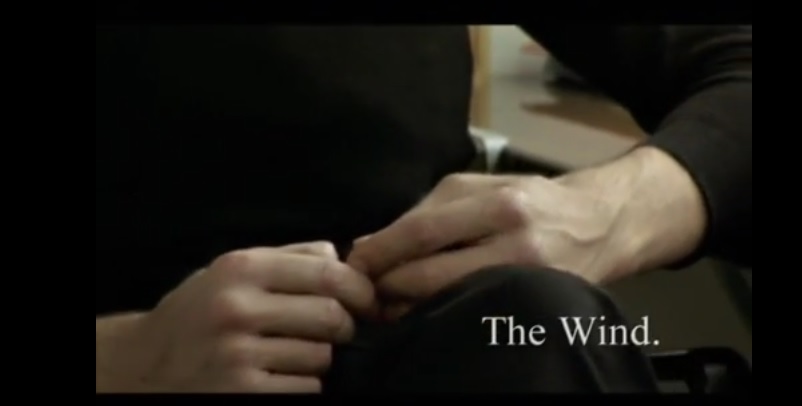
First. During the commercial you had no idea what role the sad giant plays. He wanders around and causes damage. Like King Midas, but the other way around – he slams the windows, throws sand in children’s eyes, turns the umbrella upside down and does other stupid things.

A little bit controversial is the image that the man doing all these stupid acts is elegantly dressed in black and wears a nice hat. Nobody pays attention to him which makes you think that maybe he is invisible. Or maybe persona non grata. Finally, there is one person who pays attention to him. And he invites him to take a seat on a park bench and they start talking. The friendly talk ends up with a job offer. And only now you finally get the whole point of what you have seen during the last 100 seconds.

Second. During the commercial you hear a monologue. A sad monologue. The man is alone but seems to be talking to us. Despite the fact the giant man does stupid things, his story is sad and makes you feel sorry for him.

Mister_W
Mister W. Screenshot from the video. Art of Ideas.

Third. You hear somber classical music in the background. Piano music while you see the giant trying to overcome frustration from people’s unkindly reactions.

And of course there is Guillaume Delaunay. A French actor who was smashing in his role. As we can imagine that the creative agency looked at lots of people, most likely hundreds of people who could be a perfect match. He was really believable in this role. If I have to say five words about wind and I could say whatever I want, then one of them would be Epuron and Delaunay.

It is pretty difficult to sum up this ad as there are many motives which made this ad famous and memorable. But the main thing that everyone remembers best of all is

Idea of the Day. Represent either your negative or positive fairy tale character, a phenomenon of nature or an imaginary element in a human form and make it work for your service/product and the society.

Saame tuttavaks – härra W

Looduslikel põhjustel maapinna suhtes horisontaalselt liikuv õhk ehk meie sõber tuul otsib ühiskonnas oma kohta. Ta käib mööda tänavaid ja ei saa midagi parata, kui kõikjal, kuhu ta läheb, tekitab ta kaose. Aga ta leiab lõpuks kellegi, kes teda mõistab. Ja see on loomulikult energiaettevõte koos Saksamaa keskkonnaministeeriumiga. 

Kampaania “Tuule energia” ehk inglise keeles “Power of Wind” võitis omal ajal metsikult tähelepanu oma kurva, kuid õnneliku lõpuga reklaamiga.

Mille poolest reklaam niivõrd hästi välja kukkus?

Esiteks ei olnud reklaami jooksul aru saada, mis rolli see hiiglasekasvu mees mängib. Ta käib ringi ja tekitab ainult pahandust – paugutab aknaid, lükkab lillepoti rõdult alla, pöörab pahupidi vihmavarju, viskab lapsele mänguväljakul liiva silma ning teeb muid tobedusi. Vastaka reaktsiooni tekitab see, et mees on elegantselt mustas riides ning peas on tal ka kena kaabu. Keegi tema poole pilku ei pööra, mis jätab mulje, et mees oleks just kui nähtamatu. Või siis persona non grata, kellest on parem mitte välja teha. Lõpuks pöörab tema poole pilgu ajalehte lugev mees, kes kutsub ta enda kõrvale pargipingile juttu puhuma.

Teiseks saadab kogu tegevust hiiglasekasvu mehe monoloog. Kurb monoloog. Olgugi, et ta teeb sigadusi, siis on tema jutt kurb ning paneb kaasa tundma.

Kolmandaks saadab reklaami ilus klassikalise muusika pala. Klaver. Sentimentaalne. Sobib hästi reklaami esimese poolega, mis on pigem melanhoolne. Pisarat päris silma ei too, aga midagi rõõmsat see meloodia ka ei ole.

Neljandaks Guillaume Delaunay. Tuntud prantsuse näitleja, kes sobib sellesse rolli ideaalselt. Natuke teistsugusena, kes just nagu ei sobiks hulka.

Idee kunst: isikusta mitte just kõige positiivsema taustaga tegelaskuju, loodusnähtus, tunne või mis iganes muinasjutukangelane ning rakenda ta enda toote/teenuse heaks ning ühiskonna hüvanguks.

Life without vocational education

When it comes to making your career choices, we might often think which kind of future would we have either graduating from a university or from a vocational school. Higher education or vocational education? The easiest way to show the importance of the latter one is to show life without it.

Career choices are all about matching your skills, interests and personality with the future you would like to have. So it means that decisions about your future are one of the most difficult decisions young people have to make. If not the most difficult decision.

In a majority of countries higher education has been a more attractive choice for decades – graduating a university would mean better chances in the labour market and more prestigious jobs. According to different kind of statistics a bigger salary too. Young people have the tendency to believe that a degree would open doors for them once they want to find a job. But this might not be the case any more as there are less jobs available for the university graduates and more placements for the vocational qualifications.

So the whole situation is pretty much about the image. Even the ones who have been doubting about their future choices, they might choose the university programme. And anyway, we all know that there has always been a so to speak competition between higher education and vocational education.

So here is a German solution to all the ones doubting in the relevance of vocational education. The year was 2010. And the campaign (made by a company “Scholz & Friends”) was a big hit in TV, printed media and in many other communication channels.


Why is this advertisement remarkable?

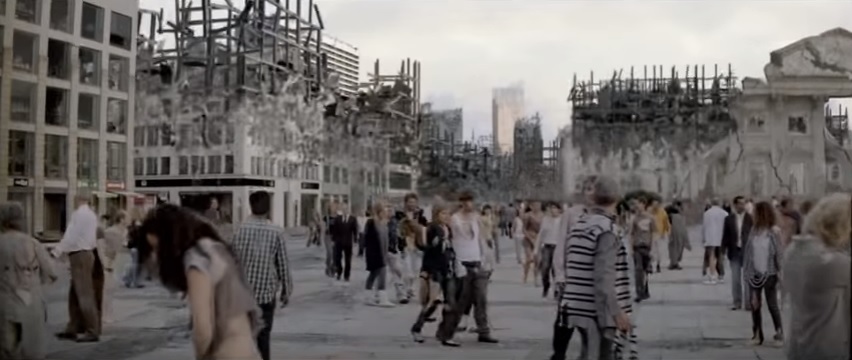
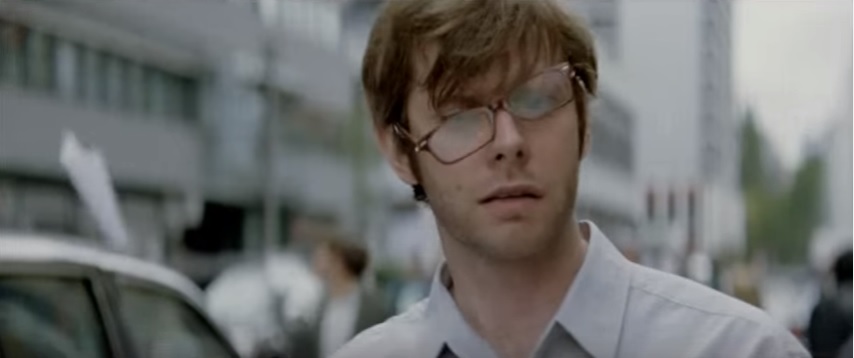
Lots of different reasons for that. But the main reason is the fact that as we see the collapsing world we have no clue what the ad is about. Second (at least for a foreigner) – the charming nursery rhyme does not help us either. So we should see the ad until the end. And when we find out that all the carpenters, cobblers, brick-layers, masons, welders, bookmakers, designers and all other professions are the ones who help us live our lives the way we like it – we can only say – long live the vocational education!

And last but not least – the message was extremely simple.

The whole image campaign for the German craft and manual skills makes the social and economic relevance of this important industry visible to the public and also praises the local craftsmen and artisans themselves.

Idea of the Day: Just imagine life without your service or product.

Handwerk_1
Image from the video “Handwerk”.
Handwerk_2
Image from the video “Handwerk”.
Handwerk_3
Image from the video “Handwerk”.
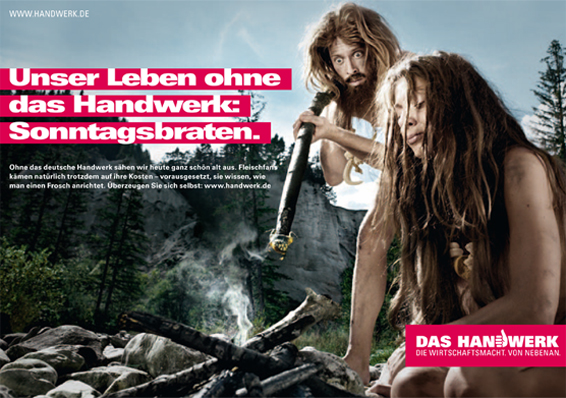
Handwerk_ad_1
Image from the campaign “Life without Craft. Sunday roast.”
Handwerk_Beer
Image from the campaign. “I don’t brew beer, I’m defending German reputation.”
Handwerk_Ad_2010
Image from the campaign. “In the beginning there was heaven and earth. The rest was done by us.”
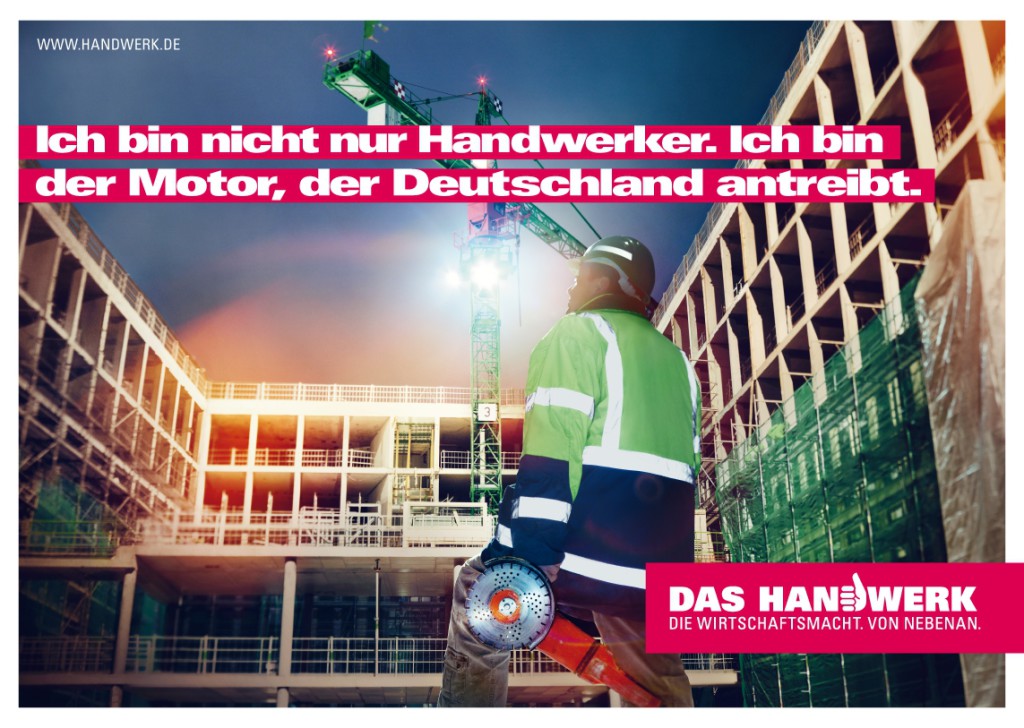
Handwerk_image_2010_3
Image from the campaign. “I’m not only a skilled worker. I am the engine that makes Germany work.”
Handwerk_ad_motors_2010
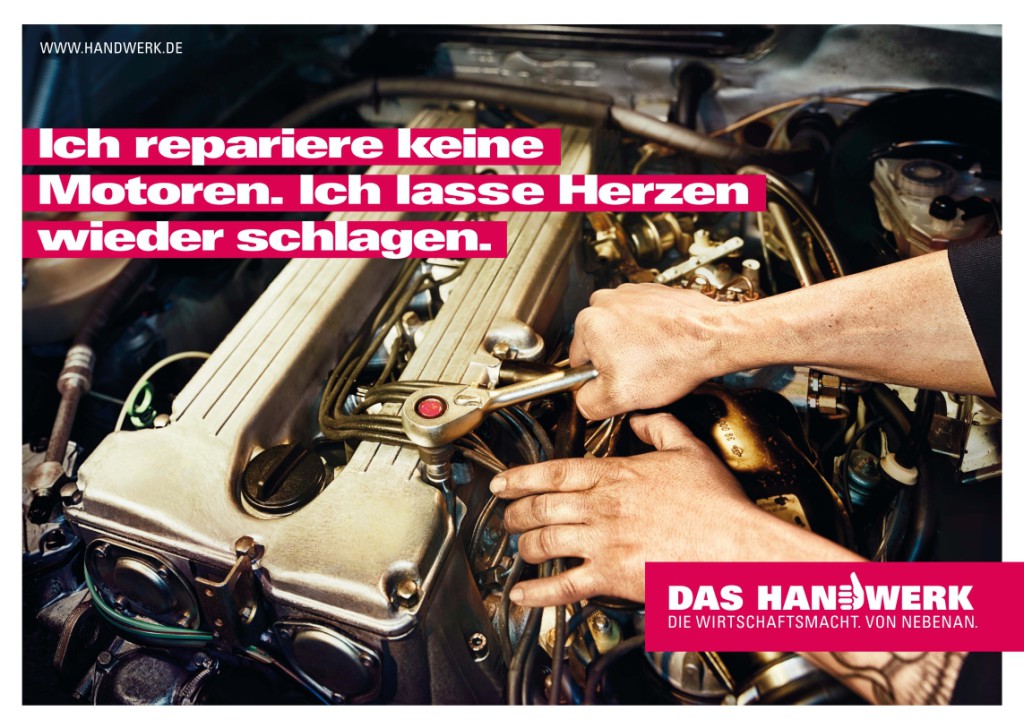
Image of the campaign. “I don’t repair the engine. I am letting the heart beat again.”


Elu ilma kutsehariduseta

Karjäärivalikuid tehes võime ikka mõelda, milline tulevik ootaks meid ees kutsehariduse saanuna või kõrgkooli lõpetanuna. Kas kõrgharidus või kutseharidus? Lihtsaim viis näidata just viimase olulisust ühiskonnale, on luua maailm ilma kutsehariduseta.

Karjäärivalik ei ole midagi muud kui oma osksute, huvide ja isikuomaduste koondamine just selle tulevikuga, mida endale soovid. See tähendab vaid seda, et tulevikku puudutavad otsused on noorte inimeste jaoks tõenäoliselt ühed kõige raskemad otsused üldse. Kui mitte kõige raskem otsus.

Enamikes maailma maades on kõrgharidus olnud atraktiivsem valik juba aastakümneid – ülikooli lõpetamine tähendas paremaid võimalusi tööturul ja järelikult ka prestiižsemaid töökohti. Ja arvestades igasugu statistikat ka kõrgemat töötasu. Noortel on kalduvus uskuda, et ülikoolikraad avab neile ukse iga kell, kui nad soovivad leida tööd. Olukord on aga mitmetes maailma piirkondades muutunud, sest ülikoolilõpetanutele enam niivõrd palju töökohti saadaval ei ole ja kutsehariduse saanuid oodatakse tööturule suurema rõõmuga.

Suures osas on kogu olukord seotud kuvandi ja imidžiga. Isegi need, kes ei ole tulevikuvalikuid päris selgelt läbi mõelnud, kalduvad ülikoolihariduse poole. Ja seda teavad tõenäoliselt kõik, et kutseharidust ja ülikooliharidust omavahel tihtipeale võrreldakse, kui mitte ei panda lausa konkureerima.

Siin on teie ees Saksa lahendus kõigile, kes on kahelnud kutsehariduse tähtsuse osas. Aasta siis oli 2010. Kampaania (tehtud ettevõtte “Scholz & Friends” poolt) oli Saksamaal tõeline hitt nii teles, printmeedias ja ka teistes kommunikatsioonikanalites.


Miks on see reklaamikampaania ja eriti selle video meeldejääv?

Palju põhjuseid. Aga peamine põhjus on see, et kokkukukkuvat maailma vaadates ei ole meil veel aimu, millest reklaam rääkima hakkab. Teiseks (vähemalt mulle kui välismaalasele) teeb asja huvitavaks haarava meloodiaga lastelaul, ning igal juhul tuleb reklaam lõpuni vaadata. Ja kui lõpuks selgub, et kõik puusepad, kingsepad, müüriladujad, keevitajad, raamatuköitjad, disainerid ja kõik muud ametid on need, mis lubavad meil elada meie elu nii nagu meile meeldib, siis saame öelda ainult, et elagu kutseharidus.

Lisaks sellele oli reklaami sõnum väga lihtne.

Seesama kuvandiloomine Saksamaa oskustöölistele aitab kogu avalikkusel aru saada valdkonna sotsiaalsest ja majanduslikust panusest ning tunnustab kohalikke käsitöölisi ja meistrimehi.

Idee kunst: Kujuta ette elu ilma sinu teenuse või tooteta.

Handwerk_1
Pilt videost “Kästitöö”.
Handwerk_2
Pilt videost “Käsitöö”.
Handwerk_3
Pilt videost “Käsitöö”.
Handwerk_ad_1
Pilt kampaaniast “Elu ilma ametioskusteta. Pühapäevahommikune grillpraad.”
Handwerk_Beer
Pilt kampaaniast. “Ma ei pruuli õlut. Ma kaitsen Saksamaa mainet.”
Handwerk_Ad_2010
Pilt kampaaniast. “Alguses oli taevas ja maa. Ülejäänu tegime meie.”
Handwerk_image_2010_3
Pilt kampaaniast. “Ma ei ole ainult oskustööline. Mina olen mootor, mis hoiab Saksamaa töös.”
Handwerk_ad_motors_2010
Pilt kampaaniast.  “Ma ei paranda mootorit. Ma lasen südamel jälle tuksuda.”

P.S. Kampaaniapiltidel oleva teksti tõlge ei pruugi olla sajaprotsendiliselt korrektne, kuid peaks andma mõtte edasi!

“Size matters” the Australian way

Australian brewery Carlton Draught made 10 years ago a television advertisement that shook both the man on the street and the creative world. Both in Australia and in the rest of the world, amongst men and women, amongst drinkers and non-drinkers.

Let’s check the advertisement first:

It’s a big ad. Very big ad. It’s a big ad we’re in. It’s a big ad. My God it’s big! Can’t believe how big it is! It’s a big ad! For Carlton Draught! It’s just so freaking HUGE! It’s a big ad! Expensive ad! This ad better sell some bloo-oo-oo-oody beer!

Anyway – Carlton Draught is one of Australia’s most popular tap beers and one of their most known slogans is “Made from beer”.

So why was this ad “Big ad” so successful?

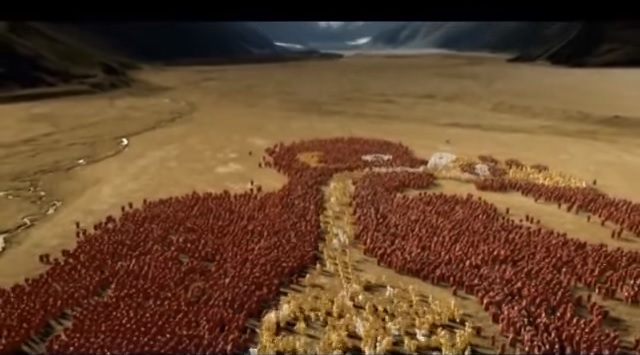
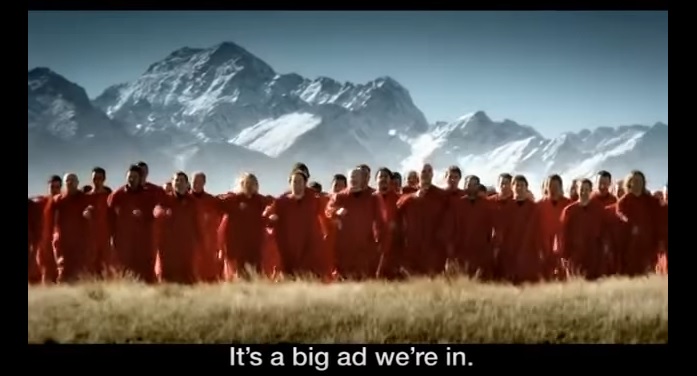
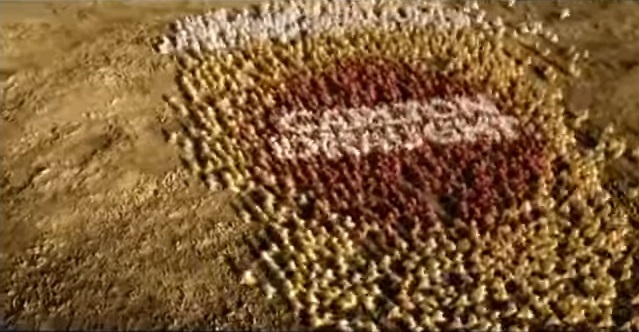
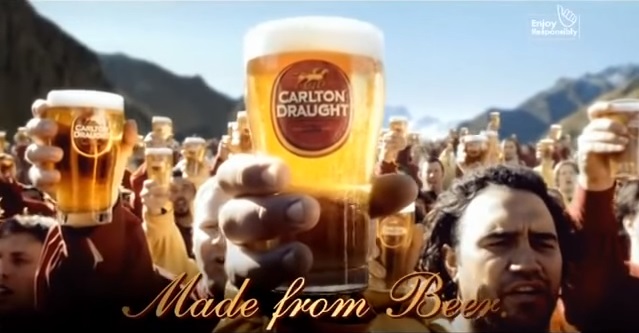
First of all because of its size. We could see lots of people, lots of coordinated activities. Men wearing choir uniforms are up to something. And when viewed from the air, the choirs forming respectively the shape of the beer glass “Carlton Draught” and a human body, you just cannot leave that unnoticed. According to all kind of advertising theories you must have caught the attention of all the people around.

Carlton_Big_AdCarlton_Big_Ad_2

Second – the classical music. Carmina Burana by Carl Orff is one of the most overused musical pieces, but right here right now together with couple of hundreds of people it sounded fresh and powerful. The text of the ad is really brief and succinct and understandable for everybody. To wrap it up – we got to know that it is a really big and expensive ad and hopefully the ad helps to sell more beer. No further discussion.

Third. Quality matters both in making the ad and marketing communications. The creative force behind the ad was one of the best agencies in Australia and many experts with an extensive experience were involved (for example the directors of photography Andrew Lesnie from the “Lord of the Rings”).

The marketing activities began with the advertisement streamed on the Internet. Streamed as long as it went viral. In some weeks the video got more than 2 million views and in more than 130 countries. Do not forget that Youtube was not a major player at that time.

Fourth. It was actually a really simple idea. Without hearing the sound of the ad we can see a process of beer drinking: beer enters the body in a happy and cheerful way.

Carlton_Big_Ad_3

Of course, as we see the New Zealand mountain range in the background we might get some kind of ideas. Many bloggers and critics have referred that the Big Ad resembles or even makes a little bit fun of the style of the “Lord of the Rings” films as nature and mountains were a big issue and one of the keywords was freedom. One observation from the gender equality topic. Despite the fact that the ad has lots of people involved, we can only see men in the advertisement. Maybe the idea was to fix the stereotype that beer is for real men and Carlton Draught is made for men. The ad is really powerful and who wouldn’t want to belong to the group of powerful people?

Humour and the punch-line make you feel good and gives you an idea to go and get something from the freezer.

Idea of the Day: Visualize the core point of your product/service by using the movements of large groups of people.

“Suurus loeb” Austraalia moodi

Austraalia õlletootja Carlton Draught tegi enam kui 10 aastat tagasi reklaami, mis tegi revolutsiooni nii tarbijate kui reklaamitegijate seas. Nii Austraalias kui mujal maailmas, nii naiste kui meeste seas, nii õllejoojate kui mittejoojate seas.

Vaadakem kõigepealt reklaam ära:

Tõlge on lihtne.
“See on suur reklaam! Väga suur reklaam! See on suur reklaam, milles me oleme! See on suur reklaam. Jumal küll, kui suur! Ei suuda uskuda, kui suur! See on suur reklaam! Carlton Draughti jaoks! See on kõhedusttekitavalt suur! See on suur reklaam! Kallis reklaam! See reklaam müügu parem paganama õlut!”

Taustateadmiseks: Carlton Draught on üks Austraalia populaarsemaid vaadiõllesid ning kasutab vaimukat tunnuslauset “Carlton Draught – tehtud õllest”.

Miks sellel reklaamil siis niivõrd hästi läks?

Esiteks kindlasti suuruse (mastaapsuse) pärast. Väga palju inimesi, väga palju koordineeritud liikumist. Ja kui need inimesed on veel riides nagu laulukoori liikmed, kes moodustavad vastavalt hiiglasliku õlleklaasi ja ka inimkeha kuju, siis tekitab see tahes tahtmata suurt tähelepanu. Ja igasuguste teooriate järgi on ülioluline osa ehk tähelepanu võitmine saavutatud.

Carlton_Big_AdCarlton_Big_Ad_2

Teiseks klassikaline muusika. Carl Orffi “Carmina Burana” on üks äärmiselt äraleierdatud pala, kuid sellel hetkel ja isegi praegu nende mitmesaja inimese taustal mõjus see värskelt ja võimsalt. Tekst on ka ülilakooniline ja arusaadav absoluutselt kõigile. Kokkuvõtvalt saime teada, et see on suur ja kallis reklaam, ning et loodetavasti aitab reklaam õlut paremini müüa. Punkt!

Kolmandaks loeb kindlasti kvaliteet nii reklaami tegemisel kui ka turundusel. Loovtöö taga oli Austraalia üks parimaid agentuure ning kaasatud oli eri filmitegijate ning näiteks ka “Sõrmuste isanda” tegemise kogemust (operaator Andrew Lesnie). Turunduses alustati reklaamitööd kõigepealt sellega, et videot levitati internetis. Levitati niikaua, kuni hakkas ise levima nagu kulutuli. Mõne nädalaga üle kahe miljoni vaatamise enam kui 130 riigis – ja ärge unustage, et tollal oli Youtube väga väike, just värskelt alustanud.

Neljandaks tuleb öelda, et tegu oli ülilihtsa ideega. Ilma heli kuulamata näeb vaataja lihtsalt protsessi, kuidas õlut juuakse: jook siseneb kehasse, tehes seda hoogsalt ja rõõmsalt.

Carlton_Big_Ad_3

Kindlasti võib mingeid assotsiatsioone tekitada see, et taamal on uhked ja kõrged Uus-Meremaa mäed. Mitmetes analüüsides ja blogides on viidatud ka, et reklaam pisut just nagu tögab “Sõrmuste isandat”, kus samuti oli loodusel ja mägedel suur roll ning kus võideldi uskumuste ja vabaduse eest. Üks tähelepanek ka võrdõiguslikkuse vallast: hoolimata sellest, et reklaamis on suur mass inimesi, on nad eranditult ainult mehed. Ju siis oli vaja kinnistada stereotüüpi, et õlu on meeste jook ning Carlton Draught on mõeldud just meestele. Reklaam mõjub jõuliselt, ning kes meist ei tahaks samastuda jõulise kuvandiga?

Huumor ning puänt tekitavad igal juhul positiivset hoiaku ning tunde, et peaks poodi minema.

Idee kunst: Mängi oma toote või teenuse olemus läbi kasutades inimeste massi.


45 minutes of fireplace footage with Nick Offerman

I guess you remember those videos and screensavers with hours of fireplace footage in different restaurants, bars or other places? Especially at Christmas time? Like they would make the atmosphere more cozy and give you a Christmas feeling?  Or maybe the reason is that you can watch fire without the fear of setting yout own house on fire.

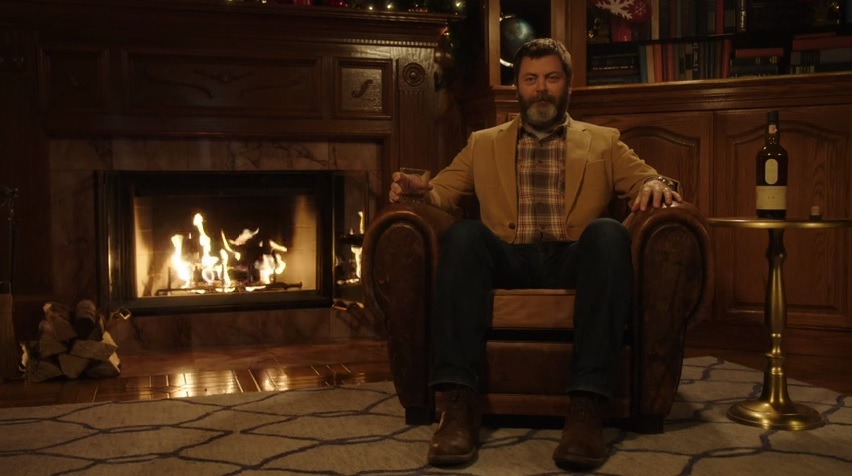
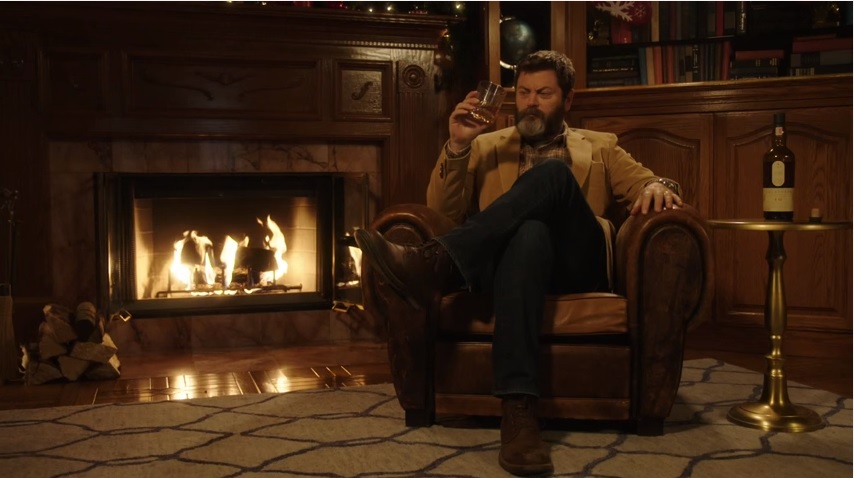
Although you may not want to see those fireplace videos for a long time (like until next Christmas), then think again. Would you accept as an added bonus the fact that you can celebrate Christmas by watching Nick Offerman sitting in an armchair for 45 minutes and drinking Lagavulin Single Malt Scotch?

This ad is brilliant.
First of all –  because it does not seem like an ad. Would you ever consider as an advertisement a 45 minute long video? Especially the one with no conversation or other particular sound whatsoever?

Second – it is a pretty ironic video when it comes to all the fireplace video fans. Those of us who don’t live in Nordic winter wonderlands or do not have fireplaces in our apartments/houses might really consider using fireplace videos to create an artificial “winter feeling” or “Christmas feeling”. But here we basically have the same thing except as a bonus we can enjoy the presence of a bearded guy who just looks at you and drinks a glass of whiskey.


Third –  this bearded guy is not a random guy from the neighbourhood, but the actor who portrayed a famous fictional character Ron Swanson from the television series “Parks and Recreations”. Swanson has a masculine personality and dislikes the government, is really superironic and tries to make his employer (city hall) less effective. Besides that Swanson loves woodworking,  hunting, meat, and a whisky called Lagavulin Single Malt Scotch.

Fourth –  this Lagavulin Single Malt Scotch is the favourite whisky of the actor Nick Offerman. Offerman had the option to give his input into the Swanson’s character and some characteristic features of Offerman were added to the characther Swanson – like the love for woodwork and for the 16-year-old Lagavulin Single Malt Scotch. If ou could pick one actor to sell your own whiskey, who wouldn’t want to choose Offerman?

The British multinational alcoholic beverages company Diageo has done wonderful work. Diageo partnered with an actor and scotch enthusiast Nick Offerman to produce genuine content called My Tales of Whisky. Offerman does not need to do anything too complicated, he can be himself and advertise the whiskeys in a pleasant and natural way. The video “Nick Offerman’s ‘Yule Log'” has more than 2 million views and soon it will be 3 million viewers.

I would say that Lagavulin Scotch came up with one of the best whiskey ads ever.

I would strongly recommend showing this video on repeat mode during Christmas instead of these regular fireplace footages. Because this video is a real holiday classic. Nothing can ruin the holiday magic as you just do not have to exchance any words at all. As they say:  it is a true friendship when friends can be in silence and they do not have to say a single word. When the silence between two friends is comfortable.

Idea of the Day: When having a splendid idea, use celebrities in your ads who like your product anyway.

Offerman lagavulin3 Lagavulin_ideasofart

45 minutit kaminat + näitleja Nick Offerman

Olete kindlasti näinud, et viimastel aastatel pannakse jõulude ajal restoranides, hotellides, baarides või mis iganes meelelahutusasutustes screensaver kaminas põlevate puuhalgudega mängima ning ongi just nagu hubasem ja mõnusam olla ning võib-olla isegi tuleb jõulutunne peale?

See video annab võimaluse näha seda sama kaminat, aga preemiana on kaasas Nick Offerman, kes naudib head viskit. Offerman on seriaali “Pargid ja puhkealad” (ingl. k. “Parks and Recreation”) üks staare, kelle mängitav tegelaskuju on nii mehelikkuse kui ka ükskõiksuse kehastus maa peal.

Reklaam on tõeliselt geniaalne.
Esiteks sellepärast, et see just nagu ei olegi reklaam. Kas võib üldse reklaamiks pidada 45minutilist videot, kus ei öelda ühtki sõna?

Teiseks on tegu kerge irooniaga kõigi nende kaminavideode suunas. Kamin on siin videos küll olemas ja praksub ka, kuid kamina kõrval istub ligi kolmveerand tundi oma toolis üks habemik, joob ära klaasi viskit ning muuhulgas lihtsalt vaatab sulle heatahtlikult otsa.

Kolmandaks ei ole toolis istuja mingi keskmise tähtsusega tegelane, vaid seriaali “Pargid ja puhkealad” ühe kultusliku tegelaskuju Ron Swansoni kehastaja. Swanson on valitsust põlgav, irooniline, mehelikke väärtusi esile tõstev, võimalikult laiskasid töötajaid värvata üritav ametnik. Muuhulgas armastab Swanson liha, jahtimist ja 16aastast ühelinnaseviskit Lagavulin Single Malt Scotch.

Neljandaks on seesama Lagavulini viski ka näitleja Nick Offermani enda lemmik. Tema käsi oli ka mängus, et mõned tema enda hobid saaks ka tegelaskujusse sisse kirjutatud. Viski reklaamimiseks on Offerman üks parimaid variante.

Maailma üks suurimaid viskitootjaid Diageo on teinud hiilgavat tööd. Kahele viskile (Oban ja Lagavulin) on loodud oma Yotube kanal “My tales of Whiskey official”, milles jooke ja sellega seonduvat tutvustabki Offerman. Kaminavideo koos 45 minutiga on tänaseks saanud juba ligi 3 miljonit vaatamist.

Järgmiste jõulude ajal siis paneme tavalise kaminatule asemel seltsiks just Offermani, Lagavulini viski ning 45 minutit meeldivat seltskondlikku vaikust. Mitte miski ei vii paremini mõnusasse pühademeeleoluu kui see südantsoojendav vaatemäng. Või siis kuuldemäng.
Sõbraga võib koos olles ka lihtsalt vaikida.

Idee kunst: Kasuta särava idee juures tuntud inimesi, kellele meeldib su toodang ka ilma reklaamita.

Lagavulin_ideasofart lagavulin3 Offerman