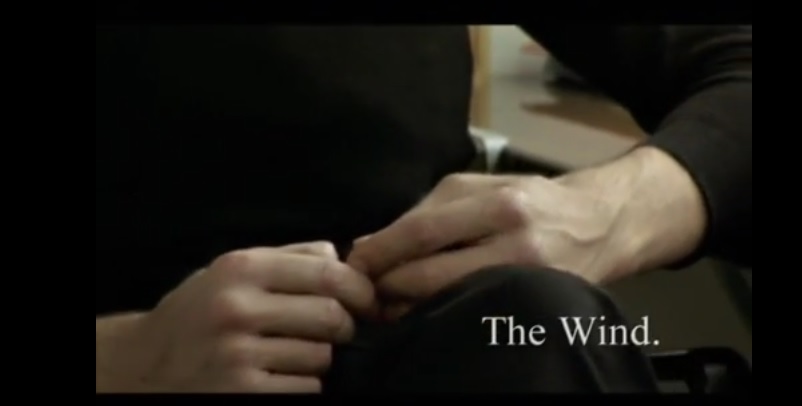
A bulk movement of air on the surface of the Earth aka the wind is trying to find its place in society. He wanders around in the streets and everywhere he goes he causes chaos. Finally he finds someone who understands him. And this someone is the energy company Epuron and the German Ministry for the Environment.
The campaign “Power of the Wind” caught lots of attention with its sad, but happily ending commercial.
Let’s have a look at it.
Why did the campaign did so well, winning lots of awards all over Europe including Grand Prix in Cannes?
First. During the commercial you had no idea what role the sad giant plays. He wanders around and causes damage. Like King Midas, but the other way around – he slams the windows, throws sand in children’s eyes, turns the umbrella upside down and does other stupid things.
A little bit controversial is the image that the man doing all these stupid acts is elegantly dressed in black and wears a nice hat. Nobody pays attention to him which makes you think that maybe he is invisible. Or maybe persona non grata. Finally, there is one person who pays attention to him. And he invites him to take a seat on a park bench and they start talking. The friendly talk ends up with a job offer. And only now you finally get the whole point of what you have seen during the last 100 seconds.
Second. During the commercial you hear a monologue. A sad monologue. The man is alone but seems to be talking to us. Despite the fact the giant man does stupid things, his story is sad and makes you feel sorry for him.

Third. You hear somber classical music in the background. Piano music while you see the giant trying to overcome frustration from people’s unkindly reactions.
And of course there is Guillaume Delaunay. A French actor who was smashing in his role. As we can imagine that the creative agency looked at lots of people, most likely hundreds of people who could be a perfect match. He was really believable in this role. If I have to say five words about wind and I could say whatever I want, then one of them would be Epuron and Delaunay.
It is pretty difficult to sum up this ad as there are many motives which made this ad famous and memorable. But the main thing that everyone remembers best of all is
Idea of the Day. Represent either your negative or positive fairy tale character, a phenomenon of nature or an imaginary element in a human form and make it work for your service/product and the society.